Skid Steer Power Rakes

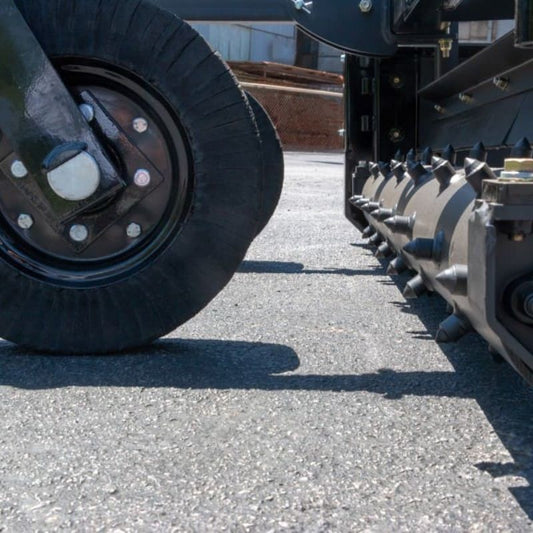
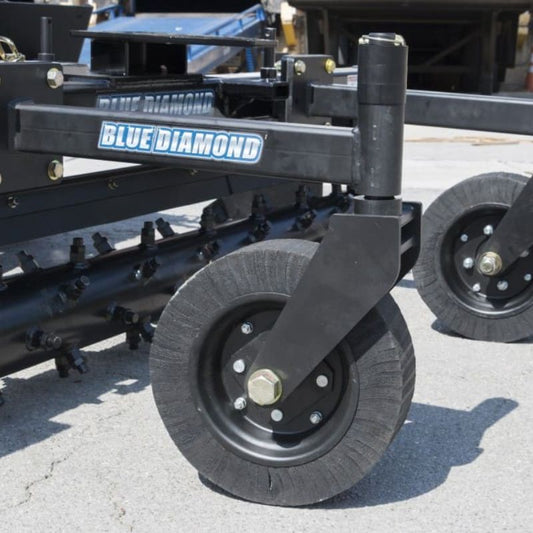
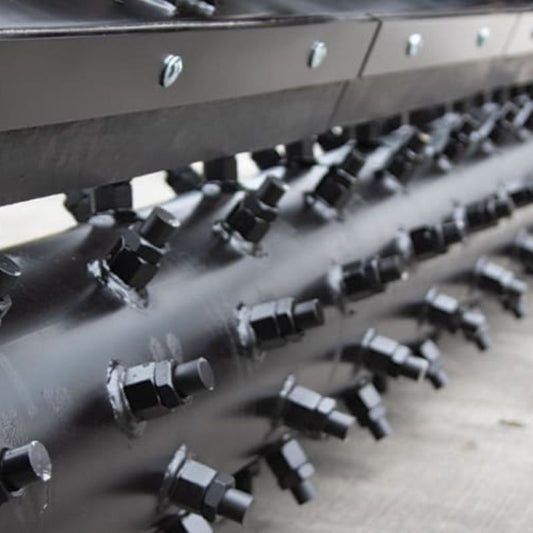
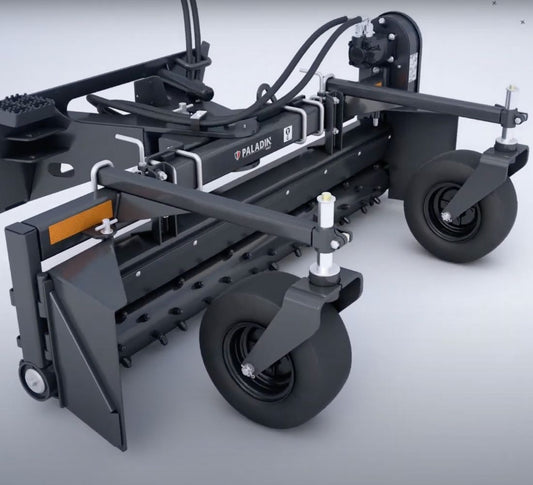
A power rake takes rough, compacted ground and leaves it graded, de-rocked, and ready to seed in a pass or two. A hydraulically driven drum fitted with replaceable carbide teeth cuts into hardpan, pulverizes clods, and windrows rocks and debris off to one side — work that would otherwise take a box blade and a landscape rake over several passes. The main decision is hydraulic flow: most power rakes want 20 to 30 GPM, so this is not an attachment every standard-flow machine can turn. From there it comes down to working width, tooth type, and hydraulic versus manual tilt. We also stock the brand-name Harley Rake line if you are shopping that specifically.

4 products

Frequently Asked Questions
What is a skid steer power rake?

A power rake is a hydraulically driven soil conditioner attachment. A rotating drum fitted with carbide teeth cuts into compacted ground, breaks up clods, and rakes
rocks and debris into a windrow off to one side. The result is a level, finished seedbed in one or two passes, which is why it is the standard tool for lawn installation, site
prep, and grading.

What does a power rake do that a box blade cannot?

A box blade moves and levels material that is already loose, but it will not break up compacted ground on its own. A power rake is powered, so the drum actively cuts
into hardpan and pulverizes clods rather than dragging them around. It also separates rocks into a windrow as it goes. For seedbed preparation the power rake does in
one pass what a box blade needs several to approximate.

How much hydraulic flow does a power rake need?

Most skid steer power rakes require 20 to 30 GPM of auxiliary hydraulic flow at around 2,000 PSI. That puts them out of reach of some standard-flow machines, so
check your auxiliary GPM in the operator’s manual before ordering. Also confirm your lift capacity can carry the attachment without affecting stability. Send us your
machine model and we will confirm compatibility.

Should I get hydraulic or manual tilt?

Hydraulic tilt lets you angle the drum from the cab, which matters if you are shaping contours, crowning a driveway, or changing which side the windrow forms on
throughout the day. Manual tilt is set by hand before you start and costs less. If you run the rake occasionally on flat ground, manual is fine. If you grade for a living,
hydraulic tilt pays for itself quickly.

What is the difference between a power rake and a Harley rake?

There is no functional difference — Harley Rake is a brand name that became the common term for the whole power rake category, the way people say Bobcat for a
skid steer. If you are searching for a Harley rake specifically, we carry that line as well. Otherwise, compare power rakes on working width, tooth count and type, tilt
method, and required hydraulic flow.