Fork Extensions for Telehandlers and Forklifts

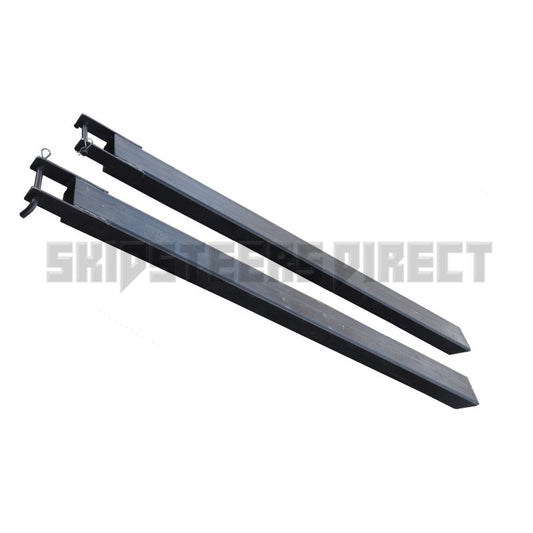
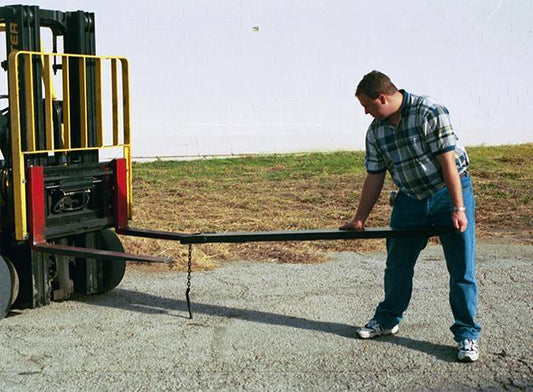
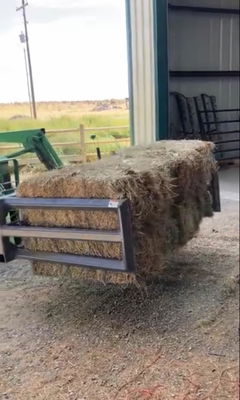
Fork extensions slide over your existing forks to add reach for loads a standard fork can't safely carry — long trusses, bundled lumber, pipe, and wide pallets that would otherwise tip or bend a short tine. They fit telehandlers and forklifts and install in seconds. The rule to work by: extensions should be no more than 150 percent of the forks they slide onto. That means 48 inch forks take extensions up to 72 inches, and 60 inch forks up to 90. Extending forks also moves the load center forward, which reduces rated capacity — check your load chart at the new center. We carry heavy-duty extensions from Haugen and Star Industries in open and closed styles. See our full range of telehandler attachments.

2 products

Frequently Asked Questions
How long of a fork extension can I use?

The working rule is that extensions should be no longer than 150 percent of the fork they slide onto. A 48 inch fork takes extensions up to 72 inches, and a 60 inch fork
takes up to 90 inches. Going beyond that puts bending load on the tine well past what it was designed for and pushes the load center out where your machine loses
capacity fast. Stay inside the ratio and check your load chart.

Will fork extensions fit my forks?

Fork extensions are sized by the inside dimensions of the sleeve, so you need the width and thickness of your existing tines to choose correctly. Most extensions are
built for common fork sizes in the 4 to 6 inch width range, with variations in thickness. Measure your forks before ordering rather than assuming — a sleeve that is too tight won't seat and one that is too loose won't ride safely. Send us your measurements and we'll confirm the fit.

Do fork extensions reduce lifting capacity?

Yes, and this is the part most people miss. Extensions push the load center farther from the carriage, and every machine's rated capacity drops as the load center
moves out. A telehandler rated for a given weight at a 24 inch load center will handle noticeably less at 36 or 48 inches. Look up your machine's load chart at the
extended center before you lift, rather than assuming the original rating still applies.

Are fork extensions safe to use?

They are, when used within their limits. Stay inside the 150 percent length rule, keep the retaining pin or locking mechanism engaged so the extension can't slide off
under load, and re-check your capacity at the new load center. Never use extensions to lift a load the fork itself couldn't handle at that weight — they add reach, not
strength. Inspect them for cracks and deformation the same way you inspect forks.

What is the difference between open and closed fork extensions?

Closed extensions use a fully enclosed sleeve that surrounds the tine on all four sides, which gives the most secure fit and spreads load evenly along the fork. Open
extensions have a slot on the underside, so they clear tines with a heel or a thicker taper that a closed sleeve won't accept. If your forks will take either style, closed is
generally the stronger choice. Measure your tines and we'll confirm which fits.