Skid Steer Cold Planers

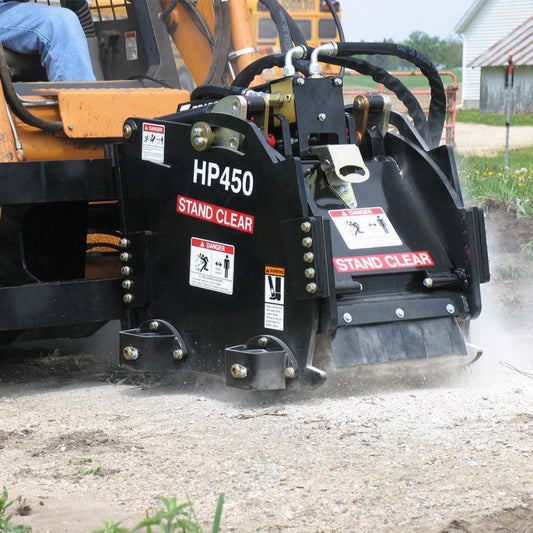
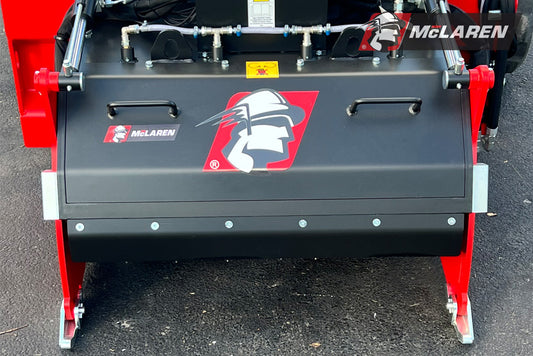
A cold planer mills asphalt and concrete off the surface without heat, cutting a clean, controlled depth for patching, utility trenches, and resurfacing prep. A rotating drum fitted with carbide teeth does the cutting, and the attachment runs off your machine's auxiliary hydraulics. Flow is the first decision. Low flow models start around 15 GPM and cut to about 5 inches. High flow units reach 48 inches wide and 6 inches deep and need up to 3,500 PSI. Severe duty models want at least 24 GPM and cut as deep as 8 inches. Side shift lets you cut tight to a curb, and water kits control dust and cool the teeth.

3 products

Frequently Asked Questions
What is a cold planer?

A cold planer is a hydraulic milling attachment that grinds asphalt or concrete off a surface without applying heat, which is where the name comes from. A drum fitted
with replaceable carbide teeth rotates against the pavement and cuts to a set depth. Contractors use them for pothole and utility patching, removing failed surface
layers, and profiling before an overlay.

How much hydraulic flow does a cold planer need?

It depends on the class of machine. Low flow cold planers run from about 15 GPM at 2,000 PSI and handle narrower cuts to roughly 5 inches deep. High flow models
drive around 90 teeth and can require up to 3,500 PSI. Severe duty units need a minimum of 24 GPM at 2,000 PSI, which restricts them to high-flow machines. Check
your auxiliary flow before you order.

How deep can a skid steer cold planer cut?

Low flow models generally cut to about 5 inches. High flow units reach 6 inches, and severe duty planers go as deep as 8 inches with over 100 teeth on the drum.
Cutting deeper than the drum is rated for will stall the attachment and wear teeth prematurely. If you need a specific depth and width combination, tell us and we will
spec the right class.

Do I need a water kit on a cold planer?

In most cases yes. Milling asphalt and concrete produces a lot of airborne silica dust, and a water kit sprays the cutting drum to suppress it while also cooling the
carbide teeth, which extends their life. Many municipal and commercial specifications require dust suppression outright. Even where it is not mandated, it makes the
work cleaner and the teeth last longer.

What is cold planer side shift and do I need it?

Side shift lets you move the drum laterally from the cab so you can cut tight against a curb, gutter, or existing joint without repositioning the machine. It comes
standard on Blue Diamond severe duty models and is available on some standard duty units, while low flow planers usually adjust manually. If you do a lot of edge
work or patching, hydraulic side shift saves real time.