Skid Steer Landscape Rakes

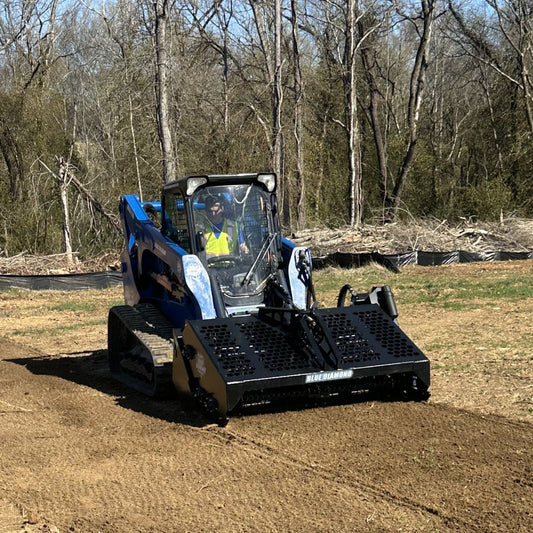
A skid steer landscape rake pulls rocks, roots, and debris out of soil while leaving a level, seedbed-ready surface — the finishing pass that turns rough dirt into ground you can plant or sod. Skid Steers Direct carries rakes from Rockaway, Blue Diamond, and DoMor Equipment, including the Super Duty Land Rake. The main decision is what the rake does with what it collects: windrowing designs gather material into a row for separate pickup, while rock-collecting designs hold debris in a basket you dump where you want it. Width should exceed your tires or tracks. For rough shaping before the rake, a box blade or grader attachment does the cutting first.

3 products

Frequently Asked Questions
What is a landscape rake used for?

It's the finishing tool in site preparation. After rough grading, a landscape rake pulls rocks, roots, and construction debris out of the top few inches of soil while leaving
a level, evenly textured surface. That's what you want before seeding, sodding, or laying pavers. It also works well for reconditioning gravel drives and cleaning up
after demolition.

What's the difference between a landscape rake and a power rake?

A landscape rake is a passive tool — the tines are dragged through soil and the machine's motion does the work. A power rake uses a hydraulically driven rotating
drum to actively churn and condition soil, which requires auxiliary hydraulics. Landscape rakes are better for pulling rock and debris; power rakes are better for
breaking up and conditioning compacted soil.

What size landscape rake do I need?

The rake should be wider than your machine's tires or tracks so you aren't driving across the surface you've just finished and re-compacting it. Beyond width, consider
weight against your loader's rated operating capacity, and tine spacing against the material you're pulling — tighter spacing catches smaller rock but clogs faster in
root-heavy or debris-laden soil.

Should I get a windrowing rake or a rock-collecting rake?

Windrowing rakes push material into a row alongside the pass, which you then pick up with a bucket or grapple. Rock-collecting designs hold debris in a basket you
carry off and dump directly. On heavily rocky ground the collecting style saves a full second pass. On cleaner soil where there's little to remove, windrowing is simpler
and usually less expensive.

Does a landscape rake need auxiliary hydraulics?

Most don't. A standard landscape rake mounts to the universal quick-attach plate and is pulled through the soil with no hydraulic function at all, so any skid steer can
run one. Models with hydraulic angle adjustment are the exception and need a working auxiliary circuit. Check the specific model if being able to change angle from
the cab matters to you.