Skid Steer Salt Spreaders

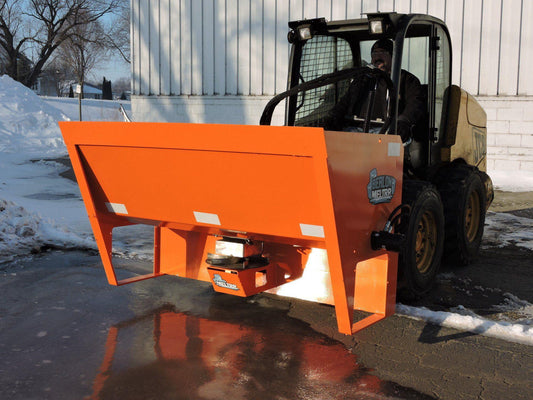
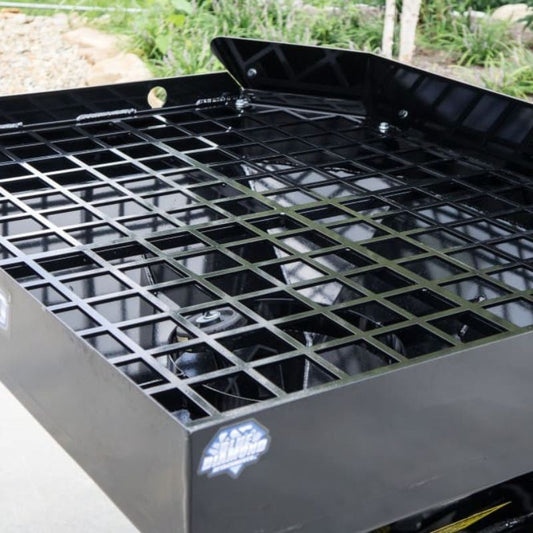
A skid steer salt spreader mounts to the quick-attach plate and turns your loader into a self-loading salter, so you scoop straight from the pile and spread without a dedicated truck or a tailgate unit. Auger-fed designs handle the material that gives spreaders trouble: damp bulk salt, sand, and salt-sand mixes that bridge and clog in gravity hoppers. Spread width and hopper capacity are the sizing decision: a wider pattern covers lots faster, and a larger hopper means fewer trips back to the pile. These spread almost any granular material, so the same unit handles seed and fertilizer in the off-season. Pair one with a snow plow.

2 products

Frequently Asked Questions
How does a skid steer salt spreader load itself?

The hopper has an open front edge that lets you drive into a salt pile and scoop, the same way you'd load a bucket, so you fill without a loader operator, a conveyor, or
bagged product. That's the practical advantage over a tailgate or truck-mounted spreader: one machine and one operator handle the whole cycle of loading, driving,
and spreading, and you can refill anywhere the pile is.

Can it spread sand and salt-sand mixes?

Yes, and this is where auger-fed units earn their price. Sand and damp salt-sand mixes bridge and pack in gravity-fed hoppers, leaving you shovelling out a clog in the
cold. An auger drives material to the spinner mechanically, so it keeps feeding through material that would stop a gravity unit. The same mechanism handles seed,
fertilizer, and most granular products in the off-season.

What hydraulic flow does a salt spreader need?

Spreaders are among the lighter hydraulic loads in an attachment lineup, since you're driving an auger and a spinner rather than a cutting head. Most run comfortably
on standard-flow machines. Check the specific model's required GPM against your machine's auxiliary output before ordering, and contact us with the make and model
if you want the fit confirmed.

Should I use sand or salt?

They do different jobs. Salt melts ice by lowering the freezing point, but it loses effectiveness as temperatures drop well below freezing and it's harder on concrete,
vehicles, and vegetation. Sand doesn't melt anything; it provides traction on top of ice, which works at any temperature but leaves cleanup in spring. Many operations
run a mix to get both, which is exactly what these spreaders are built to handle.

How do I keep a salt spreader from corroding?

Rinse it thoroughly with fresh water after every use, not just at the end of the season, and pay attention to the auger, the spinner, and anywhere salt collects in
corners. Salt left sitting in a hopper overnight does more damage than a full day of spreading. Store it dry and empty, and touch up any chipped coating before it starts
to spread.