Skid Steer Trencher Attachments

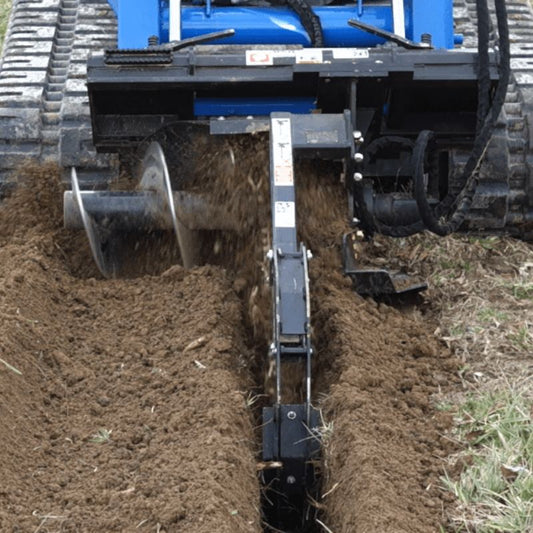
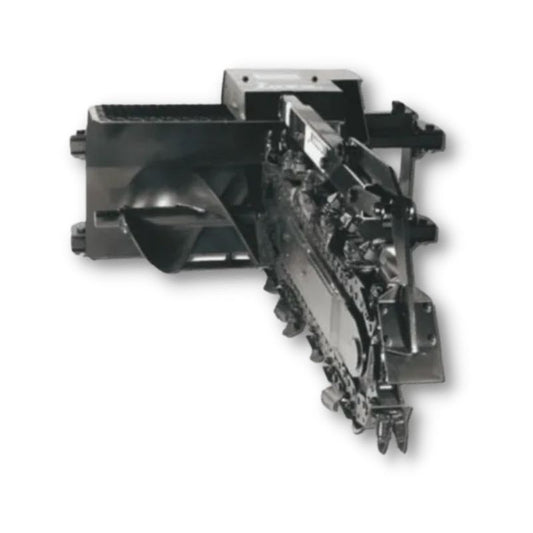
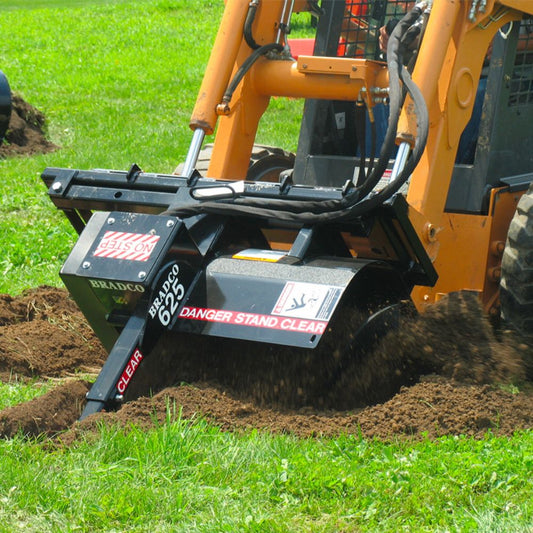
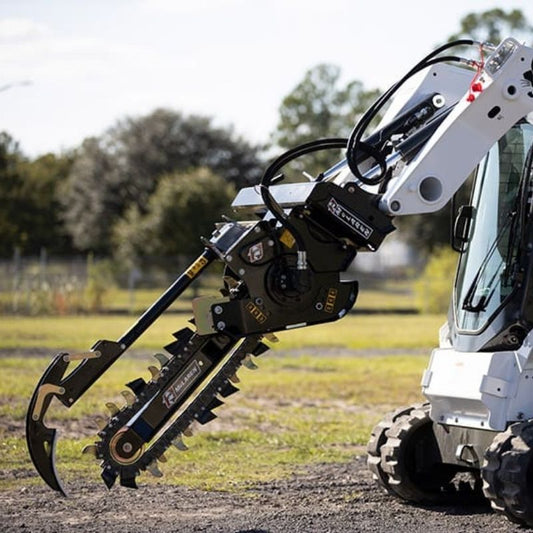
A skid steer trencher attachment cuts a clean, consistent trench for water lines, electrical conduit, drain tile, and irrigation in a fraction of the time hand digging takes. Two numbers decide which model you need: depth and width. Most skid steer trenchers cut 24 to 48 inches deep at widths from 6 to 12 inches, set by the chain and tooth configuration. Match the width to the pipe you're burying — wider just means more backfill and compaction later. Cup teeth handle dirt and clay; carbide or shark teeth are what you need in rock and frost. If you're drilling discrete holes rather than cutting a continuous line, a skid steer auger is the better tool.

4 products

Frequently Asked Questions
How deep can a skid steer trencher dig?

Most skid steer trencher attachments cut between 24 and 48 inches deep, set by the boom length of the model you choose. Depth capacity is fixed by the attachment
and not adjustable beyond that maximum, so buy for the deepest trench you realistically need. Frost line depth is the usual driver for water lines in cold climates.
Check your local code requirements first, and contact us if you'd like help matching depth to your jobs.

Do I need a high flow skid steer to run a trencher?

Not always. Many skid steer trenchers run fine on standard flow in the 15 to 25 GPM range, particularly the smaller depth and width configurations. Larger trenchers,
and any trencher working in rock or hard frozen ground, benefit from high flow because chain speed is what keeps the cut moving. Check the specific model's flow
requirement against your machine, and reach out if you'd like us to confirm the match.

What kind of trencher teeth do I need?

Tooth choice follows ground conditions. Cup teeth are the standard for dirt, loam, and clay, and they move soil efficiently at lower cost. Carbide or shark teeth handle
rock, shale, caliche, and frozen ground, where cup teeth wear out quickly or simply fail to bite. Many operators keep both sets and swap them by job. If you're unsure
what your ground calls for, tell us where you're working and we'll advise.

What does the crumber do on a trencher?

The crumber is the shoe or bar that trails behind the chain and scrapes loose spoil out of the bottom of the trench. Without one you end up with several inches of
fluffed soil in the trench floor, which means your pipe doesn't sit at true depth and settles unevenly after backfill. It costs little and saves cleanup on every job, so we
recommend running one on any trencher used for utility work.

How wide of a trench can a skid steer trencher cut?

Trench width on most skid steer trenchers runs from 6 to 12 inches, set by the chain and tooth configuration rather than the boom. Wider is not better — every extra
inch is more spoil to handle and more backfill to compact. Size the width to the pipe or conduit you're burying plus enough clearance to bed it properly. Chains can
usually be changed to run a different width on the same attachment.