Excavator Brush Cutter Attachments
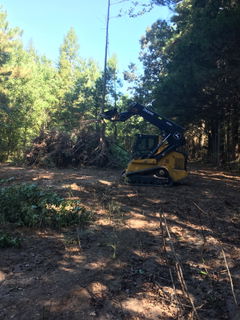
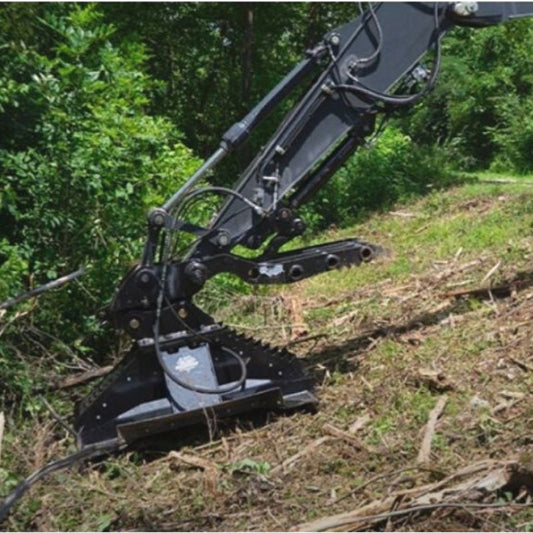
An excavator brush cutter clears overgrown brush, saplings, and small trees from ground a loader cannot safely work: ditch banks, steep slopes, pond edges, and fence lines you cannot drive along. The boom does the reaching, so the machine stays on stable ground while the head works out over the bank. This collection covers both mini excavators and large excavators, in heavy, severe, and extreme duty builds. Carrier size is the first thing to match, since an oversized head makes a small excavator unstable at reach. Hydraulic flow is the second, and duty class then sets cutting capacity. For loader-mounted work on flat ground, see our skid steer brush cutters.
-
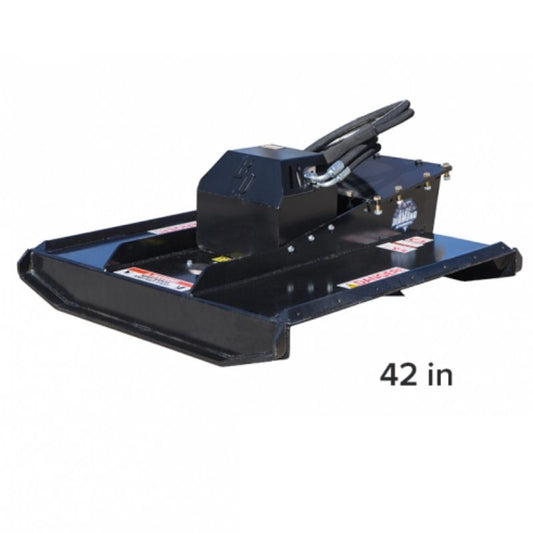
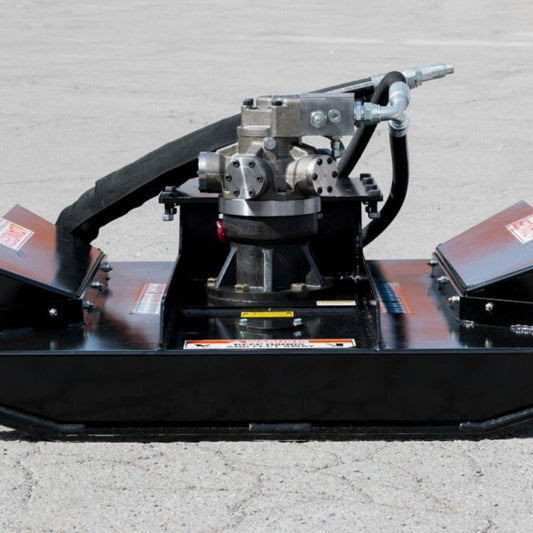
Brush Cutter Mini Excavator HD | Blue Diamond
From $7,409.60 USDRegular price From $7,409.60 USDSale price From $7,409.60 USD Regular priceUnit price per$7,863.00 USD-5%Sale -
Brush Cutter - Severe Duty Mini Excavator | Blue Diamond
$11,861.00 USDRegular price $11,861.00 USDSale price $11,861.00 USD Regular priceUnit price per$11,975.00 USD-0%Sale -
Brush Cutter Severe Duty Series 2 | Blue Diamond
$11,861.00 USDRegular price $11,861.00 USDSale price $11,861.00 USD Regular priceUnit price per -
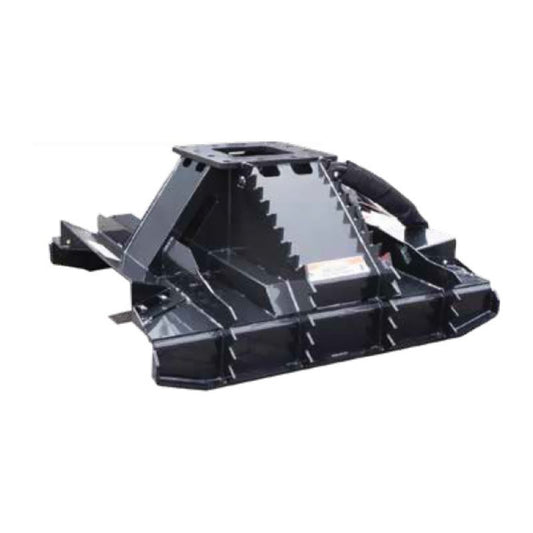
60" Severe Duty Brush Cutter- Large Excavator | Blue Diamond
$20,498.00 USDRegular price $20,498.00 USDSale price $20,498.00 USD Regular priceUnit price per -
Brush Cutter Extreme Duty Large Excavator | Blue Diamond
$18,557.00 USDRegular price $18,557.00 USDSale price $18,557.00 USD Regular priceUnit price per





Frequently Asked Questions