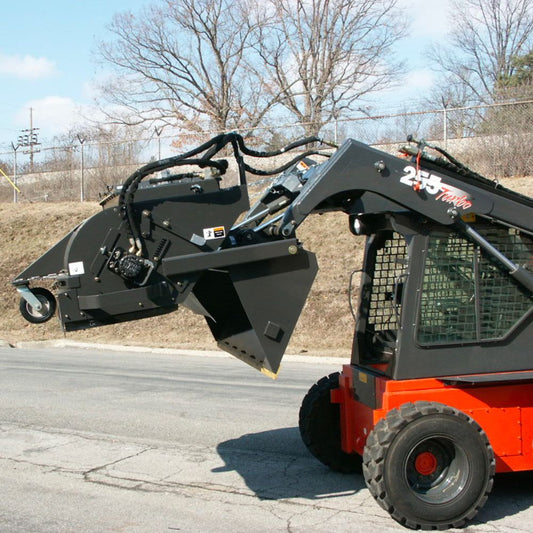
Sweepster Brooms

Sweepster builds hydraulic brooms for skid steers, and the line splits two ways. Angle brooms windrow material off to one side, which is what you want for snow, jobsite cleanup, and anywhere the debris can stay on site. Pickup brooms sweep into a hopper instead, so the debris leaves with you, the right call on paved lots, streets, and runways where you can't just push dirt to the shoulder. Bristle choice follows the surface: poly for general sweeping, wire or a poly-wire mix for packed material and heavier scrubbing. Check hydraulic flow against your machine before ordering.

3 products

Frequently Asked Questions
What's the difference between an angle broom and a pickup broom?

An angle broom sweeps material to one side in a windrow, and you angle the head left or right to control where it goes. It's faster, simpler, and cheaper, and it suits
snow and open-site cleanup. A pickup broom carries a hopper and collects what it sweeps, so you haul the debris away instead of leaving a row of it. Pickup brooms
cost more and run slower, but they're the only option on finished surfaces.

Which bristle type should I choose?

bristles handle most general sweeping, including snow, dirt, and loose debris, and are gentler on finished concrete and asphalt. Wire bristles bite into packed
material, caked mud, and light surface buildup that poly will skate over. A poly-wire combination splits the difference and is a common default when you sweep a mix
of surfaces. Wire wears faster and is more aggressive on the surface, so match it to the work.

How much hydraulic flow does a Sweepster broom need?

Each model publishes a required flow range, and brooms are generally friendlier to standard-flow machines than mulchers or grinders are. Wider heads and pickup
brooms with a hopper drive tend to want more flow than a compact angle broom. Check the specific model's GPM requirement against your machine's auxiliary output,
and contact us with the make and model if the specs are close.

Can I use a broom attachment for snow?

Yes, and for light snow a broom often beats a plow or blade. It clears down to the surface without scraping, leaves less compacted residue behind to turn to ice, and
won't catch on expansion joints or manhole covers the way a cutting edge can. Deep or heavy wet snow is still plow or blower work; brooms are at their best on a few
inches or less, and on sidewalks, ramps, and loading docks.

How long do broom bristles last?

It depends almost entirely on surface and down pressure rather than hours. Sweeping abrasive concrete with the head pushed hard into the surface wears bristles quickly; running with just enough contact to flick material clears just as well and lasts far longer. Most brooms use replaceable wafer sections, so you refill the worn
area rather than replacing the whole head.